
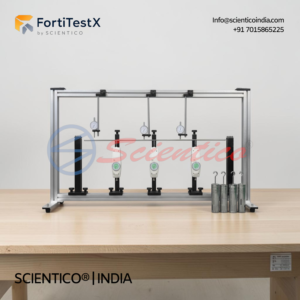
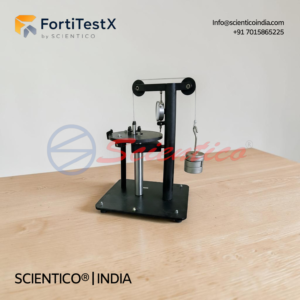
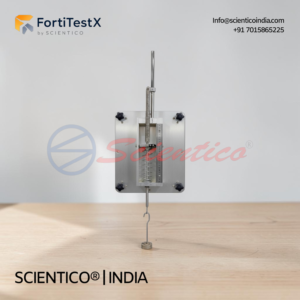
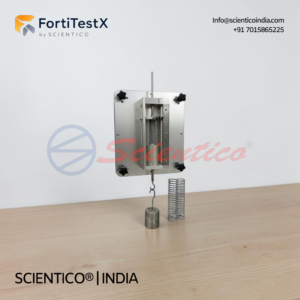



Combined Bending and Torsion Apparatus | FortiTestX 04

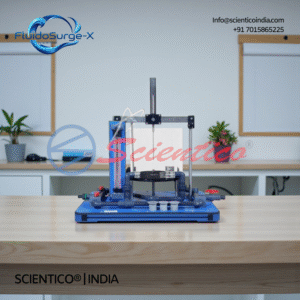
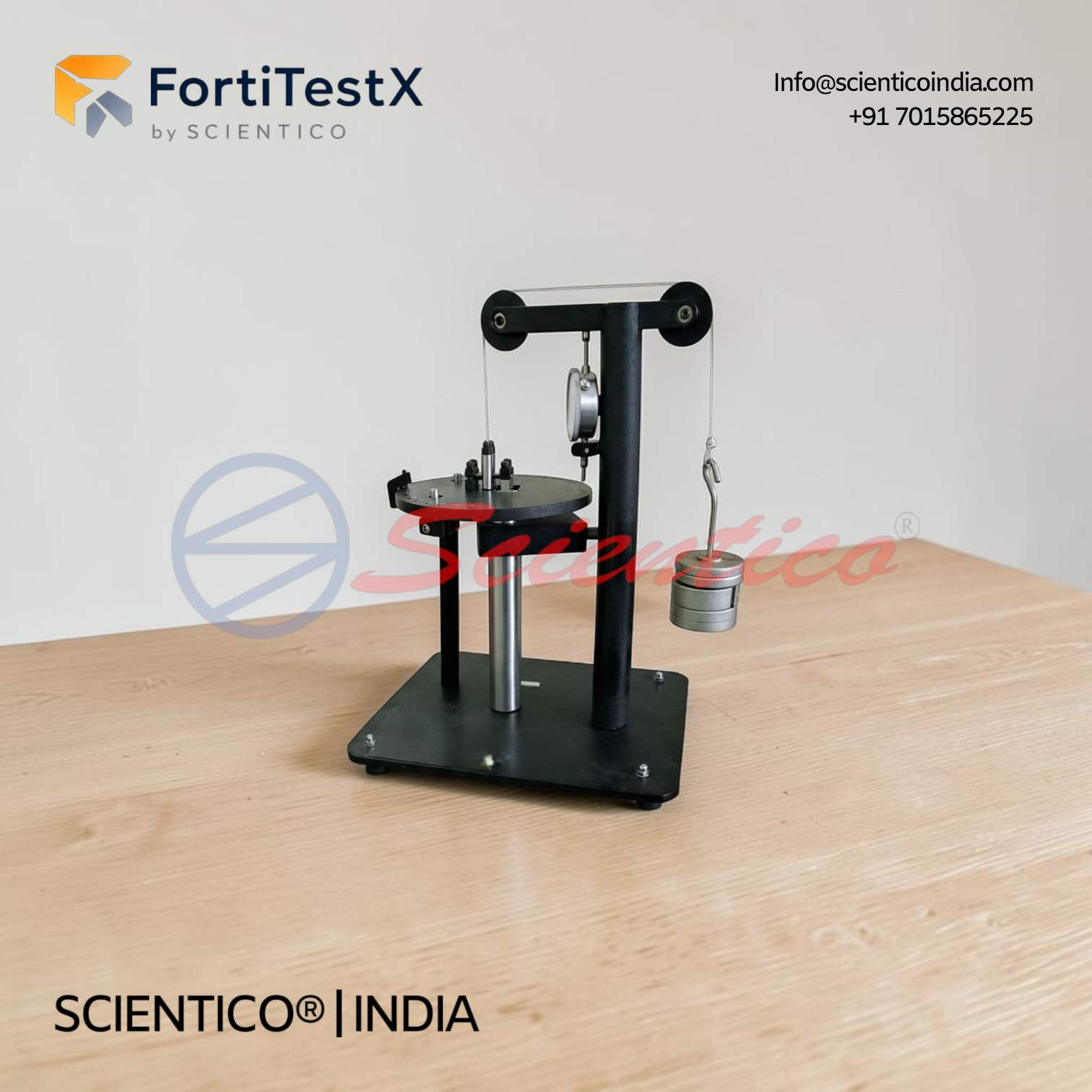
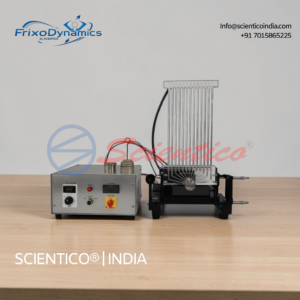
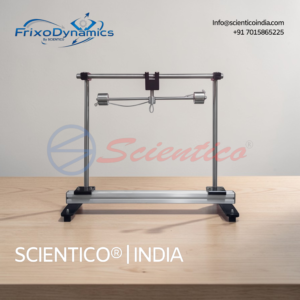
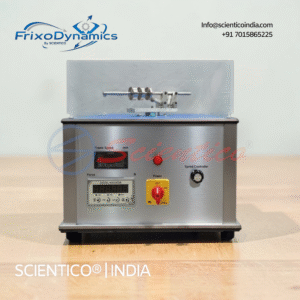
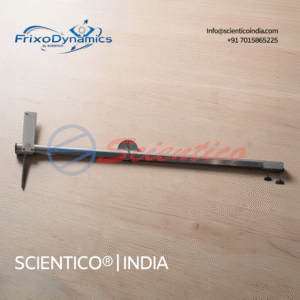
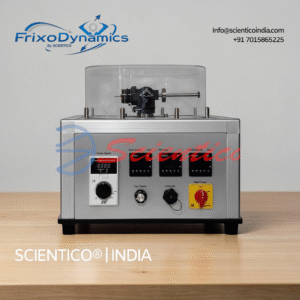
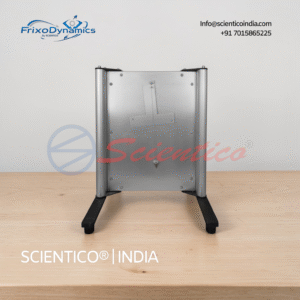
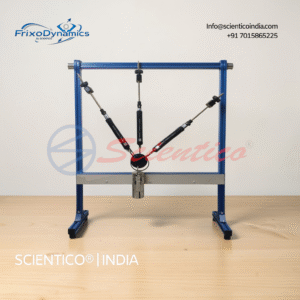
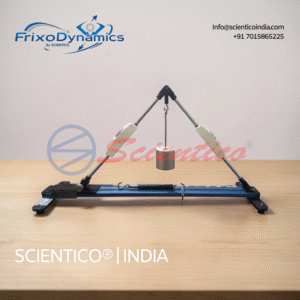
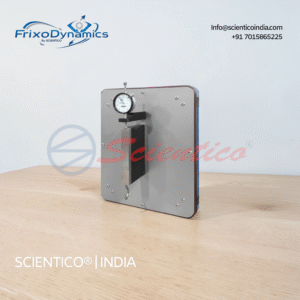
The FortiTestX 04 Combined Bending and Torsion Apparatus is a benchtop unit for experimental verification of equivalent stress hypotheses from materials science, including the direct stress hypothesis and the shear stress hypothesis. Calibrated weights are attached to a circular load plate at angular positions adjustable in 10-degree steps, enabling pure bending, pure torsion, or any defined combination to be applied to standardized metal specimens. Deformation is measured using a dial gauge with 0.01 mm resolution at the point of maximum deflection. Specimens are supplied in steel, copper, brass, and aluminum with a 4 mm diameter at the measured cross-section. Manufactured by SCIENTICO, the FortiTestX 04 is suited for advanced strength of materials and materials science laboratory courses at engineering colleges and is available for international supply.

The FortiTestX 04 Combined Bending and Torsion Apparatus is a benchtop experimental unit designed to verify equivalent stress hypotheses from materials science through controlled multi-axis loading of metal specimens. Manufactured by SCIENTICO, this apparatus is intended for use in strength of materials, mechanics of solids, and materials science laboratory programmes at engineering colleges, mechanical engineering departments, and research laboratories. It enables students to apply defined combinations of bending and torsion to standardized specimens and compare experimental results against established stress theories, including the direct stress hypothesis and the shear stress hypothesis.


Product Overview

In engineering design and materials science, components are rarely subjected to a single type of loading. Combined bending and torsion is a common real-world loading condition encountered in shafts, axles, and structural members. Equivalent stress theories — such as the maximum normal stress hypothesis and the maximum shear stress hypothesis — provide frameworks for predicting the yield point of a material under such combined loading conditions. Experimental verification of these theories is a fundamental exercise in advanced strength of materials courses.
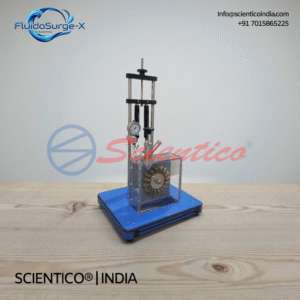
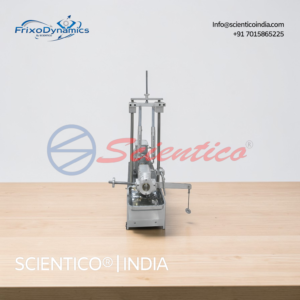
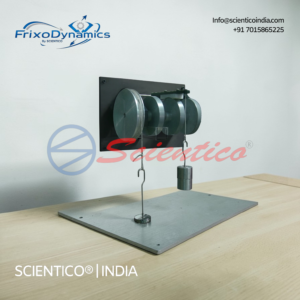
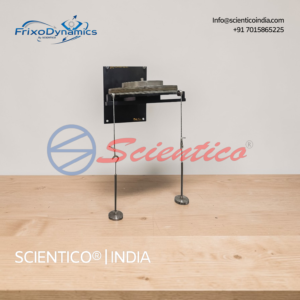
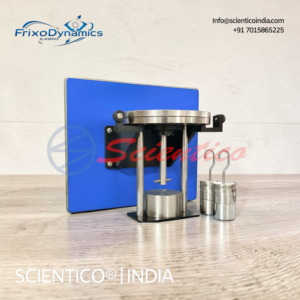
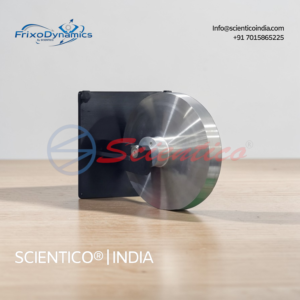
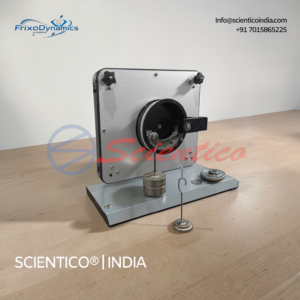
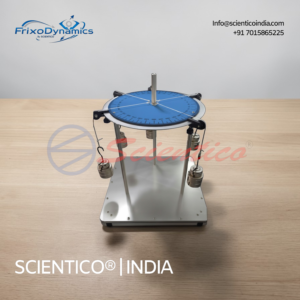
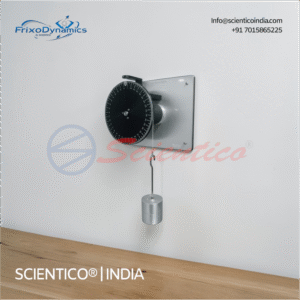
The FortiTestX 04 applies a load moment to a metal specimen by attaching calibrated weights to defined positions on the perimeter of a circular load plate, which functions as a lever arm. The specimen is clamped at the centre of the plate. The angular position of the load weight can be adjusted in 10-degree steps around the plate, enabling pure bending, pure torsion, or any defined combination of both to be applied to the specimen. This angular adjustment is the central feature of the apparatus, as it allows systematic variation of the bending-to-torsion ratio while keeping the total load moment constant.

Deformation is measured at the point of maximum deflection, positioned diametrically opposite to the point of load application. This arrangement minimises measurement error introduced by deformation of the test apparatus itself under load. The dead weight of the circular load plate and the weight of the load hanger are compensated by a counterweight, ensuring that only the intentionally applied load contributes to the specimen stress state. Specimens are available in four materials — steel, copper, brass, and aluminum — allowing comparative study of yield behaviour across different metals under identical loading conditions.

Parameter Details
Model FortiTestX 04
Unit Type Benchtop
Specimen Length 49 mm
Free Clamping Length 11.5 mm
Specimen Diameter at Measured Cross-Section 4 mm
Specimen Materials Steel, copper, brass, aluminum
Angular Adjustment of Load Position 0 to 360 degrees in 10-degree steps
Load Moment Measuring Range 0 to 3.8 Nm
Load Moment Graduations 0.1 Nm
Dial Gauge Measuring Range 0 to 10 mm
Dial Gauge Resolution 0.01 mm
Load Weights Supplied 4 x 8 N, 2 x 4 N, 1 x 1 N hanger
Counterweight 9.5 N
Scope of Delivery 1 experimental unit, 1 set of specimens, 1 instruction manual

Key Features

  • Benchtop unit for experimental verification of equivalent stress hypotheses from materials science
  • Circular load plate with defined weight attachment positions enables pure bending, pure torsion, or combined loading
  • Angular position of load weight adjustable in 10-degree steps for systematic variation of bending-to-torsion ratio
  • Dead weight compensation via counterweight eliminates the effect of plate and hanger weight on specimen stress state
  • Deformation measured at the point of maximum deflection to minimise apparatus-induced measurement error
  • Dial gauge with 0.01 mm resolution provides precise deformation readings
  • Specimens supplied in four materials — steel, copper, brass, and aluminum — for comparative yield point studies
  • Standardized specimen geometry with 4 mm diameter at the measured cross-section ensures consistent and repeatable results

Applications

  • Experimental verification of direct stress hypothesis and shear stress hypothesis
  • Determination of yield point under combined bending and torsion loading
  • Comparative study of yield behaviour across steel, copper, brass, and aluminum specimens
  • Investigation of the effect of angular load position on the bending-to-torsion ratio
  • Plotting of stress state diagrams from experimental deflection data
  • Correlation of experimental results with equivalent stress theory predictions
  • Advanced strength of materials and materials science laboratory exercises

Construction and System Design

The apparatus is constructed as a rigid benchtop unit. The circular load plate is precision-manufactured to provide defined and repeatable weight attachment positions at the perimeter. The central clamping mechanism holds the specimen securely with a free clamping length of 11.5 mm, ensuring consistent boundary conditions across all tests. The angular graduation on the load plate allows the operator to set the weight position accurately in 10-degree increments. The dial gauge is mounted at the point of maximum deflection, diametrically opposite the load application point, and provides continuous deformation readings with 0.01 mm resolution. The counterweight system offsets the dead weight of the load plate and hanger to isolate the effect of the applied load on the specimen. Specimens are standardized at 4 mm diameter at the measured cross-section and are interchangeable across the four supplied materials.


Export and Supply Capability

SCIENTICO manufactures and supplies the FortiTestX 04 Combined Bending and Torsion Apparatus to engineering institutions and laboratory equipment distributors internationally. The unit is packaged for safe transit and is suitable for supply to universities, mechanical engineering departments, and technical training institutes across export markets. Customization of specimen materials or additional weight configurations is available upon inquiry.

1. What stress theories can be verified using the FortiTestX 04?
The apparatus is designed to experimentally verify the direct stress hypothesis and the shear stress hypothesis, both of which are equivalent stress theories used in materials science to predict the yield point of a material under combined loading conditions.
2. How is the bending-to-torsion ratio adjusted on the FortiTestX 04?
The angular position of the load weight on the circular load plate can be adjusted in 10-degree steps. Positioning the weight at 0 degrees applies pure bending, while positioning it at 90 degrees applies pure torsion. Intermediate positions produce defined combinations of both, allowing systematic variation of the bending-to-torsion ratio.
3. What materials are the test specimens made from?
Specimens are supplied in four materials — steel, copper, brass, and aluminum. All specimens have a standardized diameter of 4 mm at the measured cross-section, a total length of 49 mm, and a free clamping length of 11.5 mm.

4.How is measurement error minimised in the FortiTestX 04?
Deformation is measured at the point of maximum deflection, which is diametrically opposite to the point of load application. This arrangement ensures that the deformation of the test apparatus itself under load does not contribute to the measurement reading, minimising apparatus-induced error.

5. How is the dead weight of the load plate compensated?
A 9.5 N counterweight is included with the apparatus to offset the dead weight of the circular load plate and the load hanger. This ensures that only the intentionally applied calibrated load contributes to the stress state in the specimen during testing.

You may also like

Lorem ipsum dolor sit amet, consectetur adipiscing elit, sed do eiusmod tempor incididunt ut labore et dolore magna aliqua. Ut enim ad minim veniam, quis nostrud exercitation ullamco laboris nisi ut aliquip ex ea commodo consequat.

Testimonials

Lorem ipsum dolor sit amet, consectetur adipiscing elit, sed do eiusmod tempor incididunt ut labore et dolore magna aliqua. Ut enim ad minim veniam, quis nostrud exercitation ullamco laboris nisi ut aliquip ex ea commodo consequat.

Subscribe to our newsletter

Lorem ipsum dolor sit amet, consectetur adipiscing elit, sed do eiusmod tempor incididunt ut labore et dolore magna aliqua.

    Make An Enquiry