Journal Bearing Friction Apparatus | FrixoDynamics FX-528

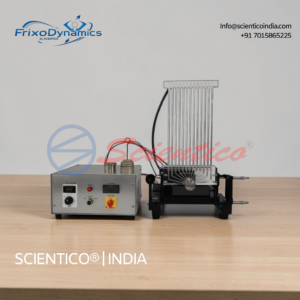
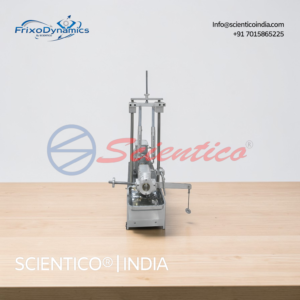
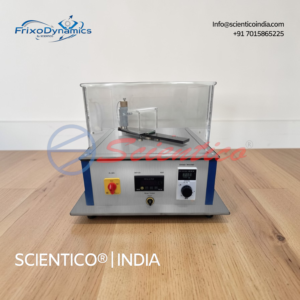
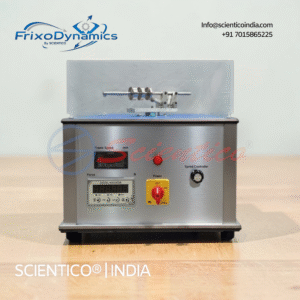
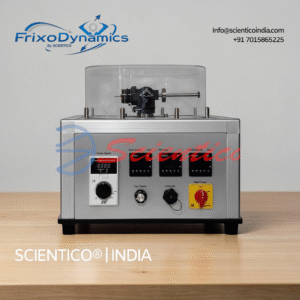
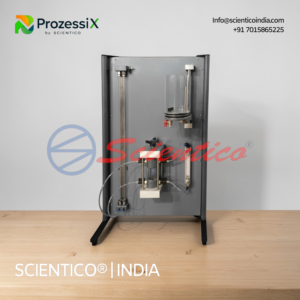
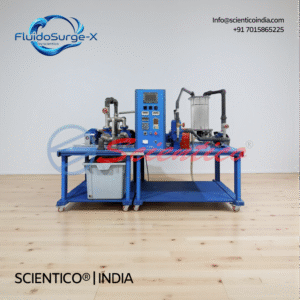
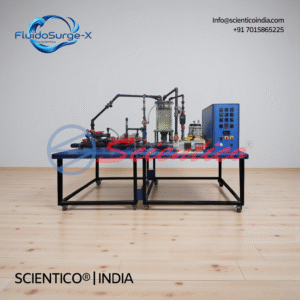
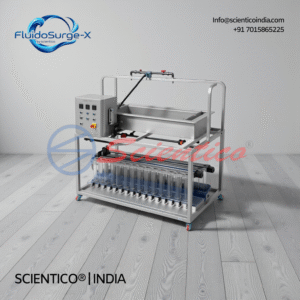
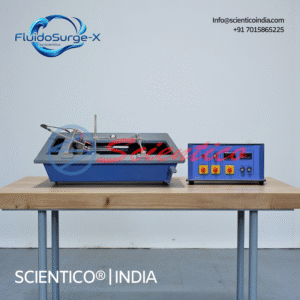
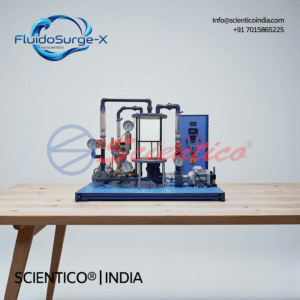
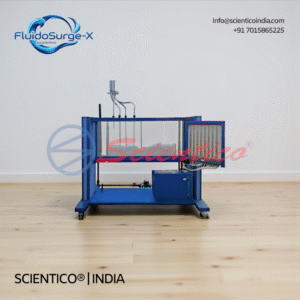
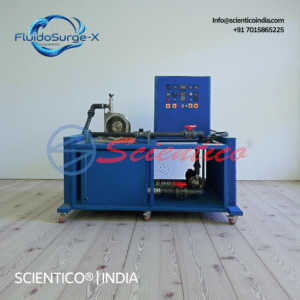
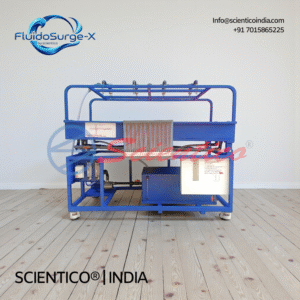
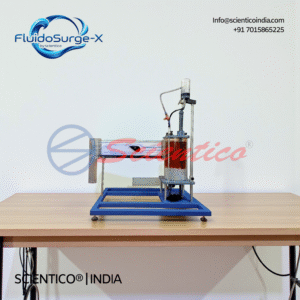
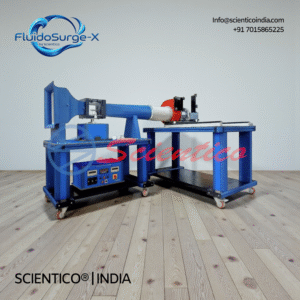
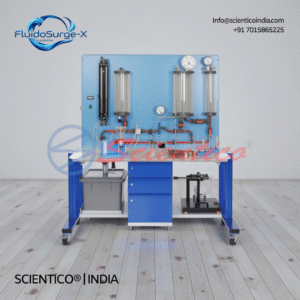
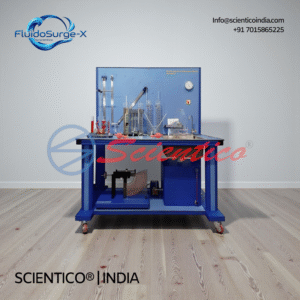
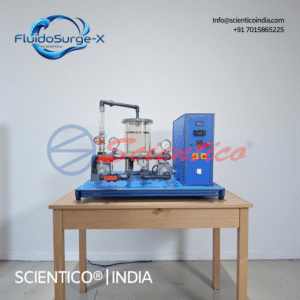
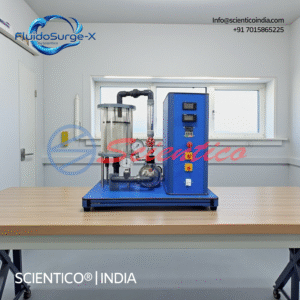
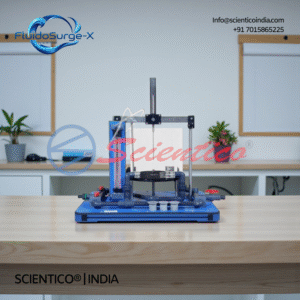
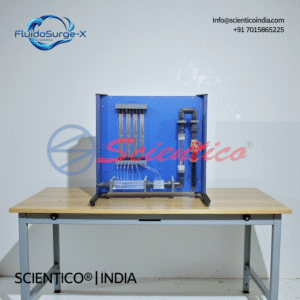
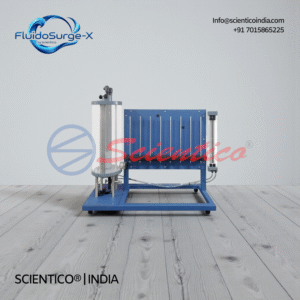
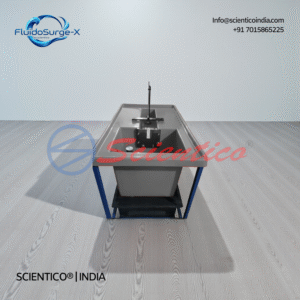
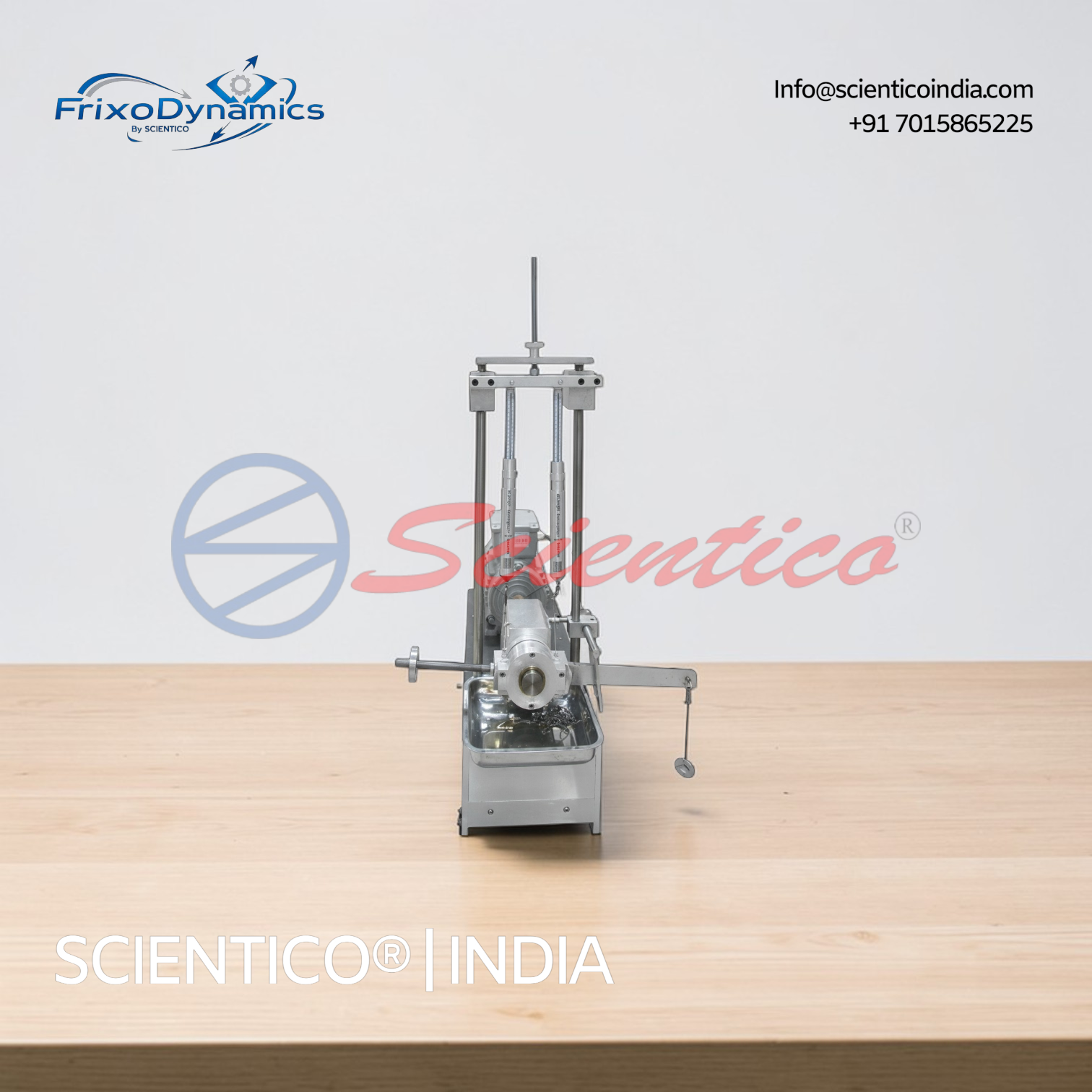
The SCIENTICO FrixoDynamics FX-528 Journal Bearing Friction Apparatus is a motorised tribology unit for the experimental investigation of hydrodynamic lubrication and friction in radial journal bearings. A 40 mm stainless steel shaft journal operates within interchangeable bearing shells of sintered bronze, cast iron, and PTFE, driven by a 750 W three-phase AC motor with variable frequency drive providing continuously adjustable speed up to 9,999 rpm. Bearing load up to 200 N is applied via a lever arm and weights, and friction moment (30–750 Nmm) is measured simultaneously using a second lever and spring balance. Digital displays show both shaft speed and lubricant temperature in real time. A drip-feed lubricator supplies ISO VG 100 oil continuously through a dedicated lubrication channel, with excess oil collected in the drip tray. Students investigate friction as a function of speed, load, bearing material, and lubricant temperature — including Stribeck curve behaviour. Suitable for undergraduate and postgraduate tribology and machine elements laboratories. Manufactured by SCIENTICO, available for institutional supply and international distribution.

The SCIENTICO FrixoDynamics FX-528 Journal Bearing Friction Apparatus is a motorised tribology unit for the experimental investigation of friction phenomena in radial journal bearings under controlled conditions of speed, load, lubrication, and bearing material. A 40 mm diameter stainless steel shaft journal operates within interchangeable bearing shells of sintered bronze, cast iron, and PTFE (Teflon), allowing direct material pairing comparisons under hydrodynamic lubrication. A three-phase AC motor with variable frequency drive (VFD) provides continuously adjustable shaft speed up to 9,999 rpm, with digital display of both speed and lubricant temperature. Friction moment is measured via a lever arm and spring balance system over a range of 30–750 Nmm. Manufactured by SCIENTICO, the FX-528 is suitable for supply to engineering institutions and distributors worldwide.

Product Overview
 

Journal bearings — also referred to as plain or sleeve bearings — support radial loads on rotating shafts through a thin film of lubricant that separates the shaft journal from the bearing shell surface. The behaviour of this lubricant film, and the friction it produces, is governed by hydrodynamic lubrication theory. The friction force in a journal bearing is not constant but varies with shaft speed, bearing load, lubricant viscosity, lubricant temperature, and the material pairing at the bearing interface. Understanding these dependencies is a core topic in tribology and machine element design.

The FX-528 provides a systematic experimental approach to all of these variables. The stainless steel shaft journal of 40 mm diameter and 55 mm bearing width operates within a free-moving bearing housing that accepts three interchangeable bearing shells — sintered bronze, cast iron, and PTFE. Each shell is 5 mm thick and conforms to the shaft journal geometry. The free-moving housing design allows the bearing to align naturally with the shaft under load, replicating the self-aligning behaviour of real journal bearings.

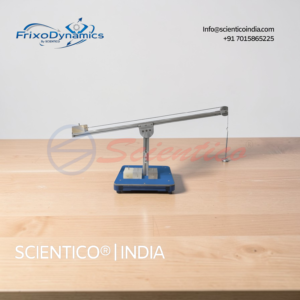
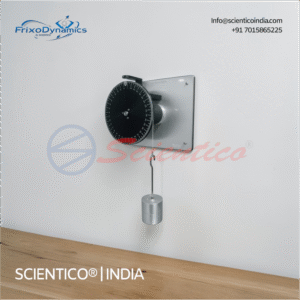
Bearing load is applied to the housing using a lever arm and calibrated dead weights, up to a maximum of 200 N. The load is confirmed using a spring balance on the lever. The friction moment generated in the bearing under the applied load and speed conditions is measured via a second spring balance attached to the bearing housing lever at a known arm radius, giving a friction moment reading over the range of 30–750 Nmm. The two spring balances supplied allow both load and friction moment to be measured simultaneously without instrumentation changes between readings.

The three-phase AC motor delivers 750 W (1 hp) and is controlled by a variable frequency drive (VFD) that adjusts the shaft speed continuously from rest to a maximum indicated on the digital display — readable up to 9,999 rpm. An inductive speed sensor provides the speed signal to the digital display, giving a precise, real-time shaft speed readout independent of the VFD frequency setting. Lubricant temperature is monitored continuously by a sensor with a range of −100 to 400°C, displayed digitally alongside the speed, allowing students to observe the effect of temperature rise on lubricant viscosity and friction during extended running.

Lubrication is supplied by a drip-feed lubricator that distributes ISO VG 100 oil (or alternative viscosity grades) to the shaft through a dedicated lubrication channel. Excess lubricant that escapes the bearing is collected in a drip tray, keeping the working area clean and allowing the lubricant consumption rate to be observed. Both the lubricating gap and the shaft journal surface are visible during operation, providing direct visual confirmation of the lubrication condition.

Parameter Specification
Model FrixoDynamics FX-528
Bearing Journal Diameter 40 mm
Bearing Width 55 mm
Bearing Shell Thickness 5 mm
Bearing Shell Materials Sintered bronze, cast iron, PTFE (Teflon)
Shaft Material Stainless steel
Maximum Bearing Load 200 N
Friction Moment Range 30 – 750 Nmm
Friction Moment Measurement Lever arm with spring balance
Load Application Lever arm and calibrated dead weights
Motor Three-phase AC, 750 W / 1 hp
Speed Control Variable frequency drive (VFD) with digital display
Speed Sensor Inductive
Speed Display Range 0 – 9,999 rpm
Temperature Sensor Range −100 to 400°C
Lubrication Drip-feed lubricator, ISO VG 100 or alternative
Lubricant Collection Drip tray
Weight Set 1 x 0.5 N hanger, 10 x 0.1 N, 3 x 0.5 N
Scope of Delivery 1 experimental module, 1 set of bearing shells, 2 spring balances, 1 set of weights, 1 drip tray, 2 drip-feed lubricators, 1 instructional manual

Key Features

  • Three interchangeable bearing shells — sintered bronze, cast iron, and PTFE — on a common 40 mm stainless steel shaft journal for direct material pairing comparison under identical speed and load conditions
  • Three-phase AC motor (750 W) with VFD provides continuously variable shaft speed with digital display up to 9,999 rpm — enabling systematic speed-dependent friction investigation
  • Inductive speed sensor ensures accurate, real-time shaft speed measurement independent of the VFD control setting
  • Friction moment measured via lever arm and spring balance (30–750 Nmm range) — load and friction moment measurable simultaneously using two supplied spring balances
  • Digital display of both lubricant temperature and shaft speed on the control panel for continuous monitoring throughout the experiment
  • Drip-feed lubricator with dedicated lubrication channel delivers consistent, controllable oil supply to the bearing — ISO VG 100 or alternative viscosity grades
  • Drip tray collects escaping lubricant, maintaining a clean working environment and allowing lubricant consumption observation
  • Both lubricating gap and shaft journal surface visible during operation for direct observation of hydrodynamic film condition

Applications

  • Experimental investigation of hydrodynamic lubrication principles in radial journal bearings
  • Determination of friction moment as a function of shaft speed for a given bearing load and material pairing
  • Investigation of the effect of bearing load on friction moment at constant speed
  • Comparison of friction behaviour across sintered bronze, cast iron, and PTFE bearing shell materials
  • Study of the effect of lubricant temperature on friction moment and lubricant viscosity
  • Investigation of the Stribeck curve — the relationship between friction coefficient and the ratio of speed to bearing load — using the FX-528 experimental data
  • Undergraduate and postgraduate laboratory practicals in tribology, machine elements, mechanical engineering design, and lubrication engineering
  • Supplementary demonstration for courses covering hydrodynamic bearing theory, lubricant selection, and bearing material choice

Construction and System Design

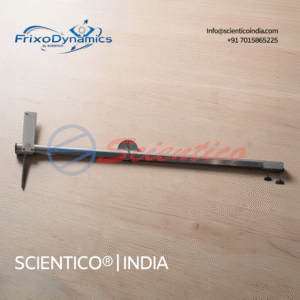
The FX-528 is built on a rigid base panel that houses the motor, VFD control electronics, digital display, and lubrication system. The three-phase AC motor is coupled to the stainless steel shaft journal through a suitable drive connection. The shaft runs in the free-moving bearing housing, which is constrained from rotating by the lever arm connected to the friction moment spring balance. The lever arm extends from the bearing housing at a known radius, so the spring balance reading on the lever directly gives the friction moment when multiplied by the arm length.

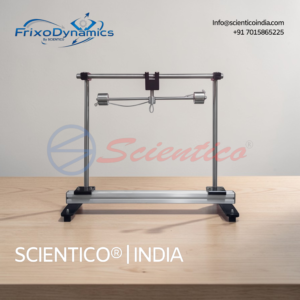
Bearing load is applied to the top of the bearing housing through a separate lever and weight hanger system, confirmed by the load spring balance. The knurled screw at the top of the housing allows fine adjustment of the applied load. The interchangeable bearing shells — sintered bronze, cast iron, and PTFE — are seated in the housing bore and clamped in position before the experiment begins. Changing shells requires only the removal and replacement of the shell in the housing, with no modification to the shaft, lever, or lubrication system.

The drip-feed lubricator is mounted above the bearing and delivers oil at a controlled drop rate through the lubrication channel to the bearing clearance gap. Two lubricators are supplied, allowing different oil types or viscosity grades to be prepared and switched between experiments without refilling. Oil escaping the bearing clearance falls into the drip tray below the housing, keeping the base panel clean. The temperature sensor is positioned to monitor the lubricant temperature continuously, and the digital display updates in real time alongside the speed reading, allowing students to observe temperature-related changes in friction during extended running conditions.

Export and Supply Capability

The SCIENTICO FrixoDynamics FX-528 is available for supply to engineering colleges, technical universities, mechanical engineering departments, research institutions, and industrial training centres. SCIENTICO manufactures and exports laboratory equipment to institutions and distributors across multiple regions. Standard packaging is suitable for international shipment. Bulk orders, customised configurations, and institutional procurement enquiries are welcomed. Please contact SCIENTICO directly for pricing, lead times, and shipping terms.

Q1: What is the journal bearing friction apparatus used for in engineering education?

The FX-528 is used to investigate the friction phenomena in radial journal bearings under controlled conditions of speed, bearing load, lubrication, and material pairing. Students measure the friction moment generated in the bearing using a lever arm and spring balance, observe how it varies with shaft speed, applied load, lubricant temperature, and bearing shell material, and relate the results to hydrodynamic lubrication theory — including the Stribeck curve relationship between friction coefficient and the ratio of speed to bearing pressure.

Q2: What is hydrodynamic lubrication, and how does the FX-528 demonstrate it?

Hydrodynamic lubrication occurs when a rotating shaft journal generates sufficient pressure in the lubricant film to completely separate the shaft and bearing surfaces, eliminating direct metal-to-metal contact. The friction force in this regime is determined by the viscous shear of the lubricant film rather than by surface asperity contact. The FX-528 demonstrates this by showing that friction moment decreases as shaft speed increases from rest — where boundary lubrication dominates — toward the full hydrodynamic regime at higher speeds, producing the characteristic Stribeck curve shape.

Q3: How does bearing shell material affect friction in the FX-528?

The three bearing shell materials — sintered bronze, cast iron, and PTFE — have different surface hardness, thermal conductivity, and compatibility with the steel shaft journal. Under boundary or mixed lubrication conditions, where the lubricant film is thin and surface contact occurs, the material pairing significantly affects the friction coefficient and wear rate. PTFE has the lowest boundary friction coefficient; sintered bronze offers good load capacity and compatibility with oil lubrication; cast iron provides high hardness and wear resistance. The FX-528 allows direct measurement of friction moment for each shell under identical speed and load conditions.

Q4: What role does lubricant temperature play in journal bearing friction?

Lubricant viscosity decreases with increasing temperature. Lower viscosity reduces the hydrodynamic pressure developed in the lubricant film, which can shift the lubrication regime from fully hydrodynamic toward mixed lubrication — increasing friction and wear risk. The FX-528 monitors lubricant temperature continuously on the digital display, allowing students to observe how friction moment changes as the bearing warms up during operation, and to investigate the importance of lubricant viscosity grade selection for a given bearing speed and load condition.

Q5: What is included in the scope of delivery for the FX-528?

The FX-528 is supplied as a complete experimental kit including: one journal bearing experimental module with stainless steel shaft, free-moving bearing housing, lever arm, VFD-controlled three-phase motor, inductive speed sensor, and digital speed and temperature display; one set of bearing shells (sintered bronze, cast iron, PTFE); two spring balances for load and friction moment measurement; one set of calibrated weights (1 x 0.5 N hanger, 10 x 0.1 N, 3 x 0.5 N); one drip tray; two drip-feed lubricators; and one comprehensive instructional manual covering experimental procedures, lubrication theory, and data recording guidance.

You may also like

Lorem ipsum dolor sit amet, consectetur adipiscing elit, sed do eiusmod tempor incididunt ut labore et dolore magna aliqua. Ut enim ad minim veniam, quis nostrud exercitation ullamco laboris nisi ut aliquip ex ea commodo consequat.
Testimonials

Lorem ipsum dolor sit amet, consectetur adipiscing elit, sed do eiusmod tempor incididunt ut labore et dolore magna aliqua. Ut enim ad minim veniam, quis nostrud exercitation ullamco laboris nisi ut aliquip ex ea commodo consequat.

Subscribe to our newsletter

Lorem ipsum dolor sit amet, consectetur adipiscing elit, sed do eiusmod tempor incididunt ut labore et dolore magna aliqua.

    Make An Enquiry